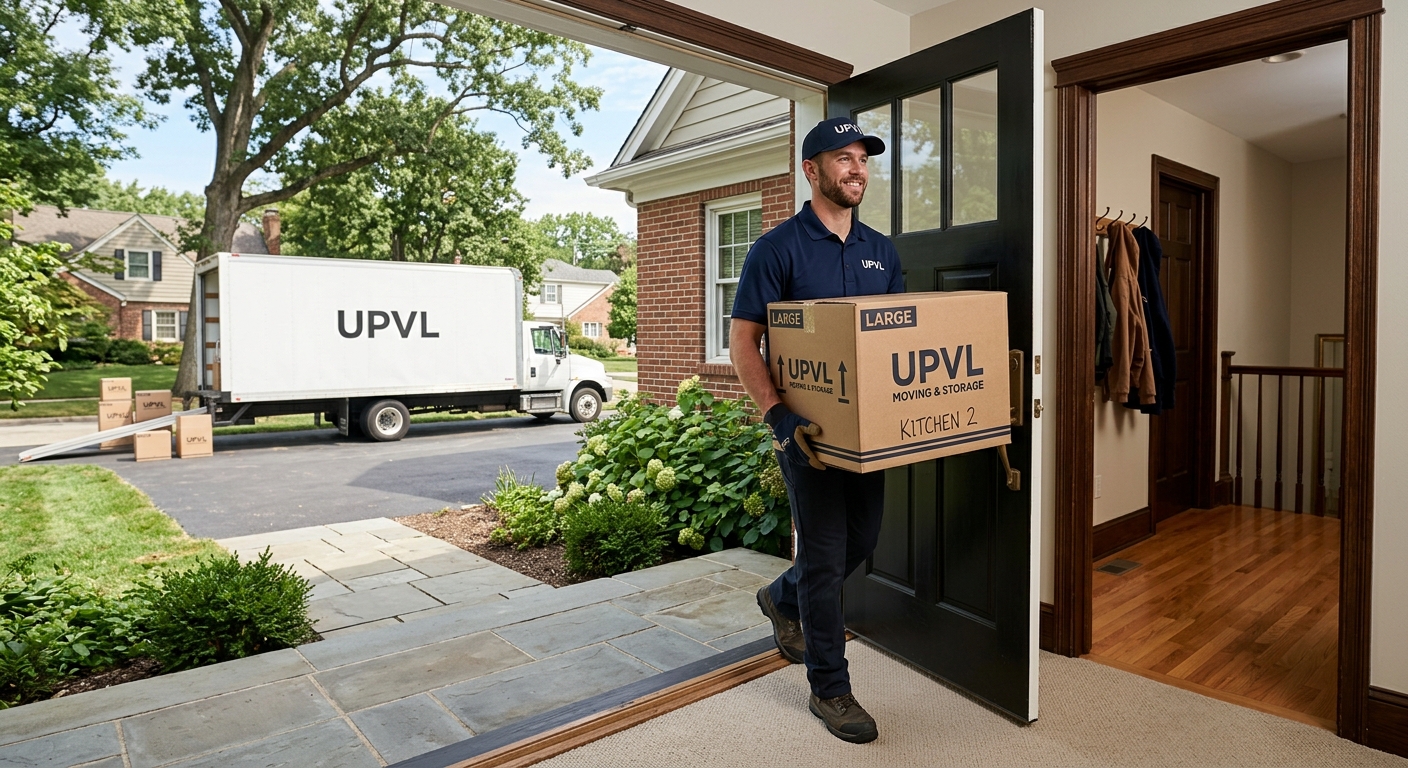
Planning a move can feel overwhelming, especially when you start comparing quotes, services, and timelines. Whether you are moving across town or across the country, a clear moving plan, realistic budget, and understanding of how professional movers work can save you stress, time, and money.
Quick Navigation
Planning ahead is the single biggest moving tip that separates a smooth move from a stressful one. When you understand your timeline, budget, and the services you need, you can compare professional movers fairly, avoid last-minute fees, and protect your belongings.
Professional movers structure their schedules, trucks, and crews around confirmed reservations. The earlier you book, the more control you have over move dates, arrival times, and cost. For long-distance or interstate moves, early planning also gives you better delivery windows and more options for consolidating shipments to reduce cost.
Most households should start planning 6–8 weeks before moving day. For complex interstate or cross-country moves, 8–12 weeks is safer, especially during peak moving season from May through September, when demand and prices are higher according to U.S. Census Bureau migration patterns.
Here is a quick timeline overview that works for many moves:
| Time Before Move | Key Tasks | Why It Matters |
|---|---|---|
| 8–12 weeks | Declutter, research movers, request quotes | Lock in dates, compare estimate types, avoid peak-day surcharges |
| 6–8 weeks | Book your mover, plan time off, reserve elevators/parking | Ensures availability and proper building access |
| 3–4 weeks | Begin packing, change address, schedule utilities | Prevents last-minute rush and service gaps |
| 1 week | Pack essentials bag, confirm details, prepare payment | Reduces move-day surprises and delays |
Following this timeline gives you space to make smart choices: what to move, what to donate, and which services are worth paying for versus doing yourself.
Understanding the main types of moving services makes it easier to compare quotes and avoid misunderstandings. Most professional movers offer a mix of local, long-distance, packing, and storage services, with optional add-ons for specialty items.
These are the core services most customers use when hiring professional movers:
| Service Type | What It Typically Includes | Best For |
|---|---|---|
| Local moving | Loading, transport, unloading within same metro area (usually under 50–100 miles) | Apartment moves, house moves, short in-town relocations |
| Long-distance moving | Interstate or long intrastate transport, larger trucks, delivery windows, valuation options | State-to-state relocation, job moves, family moves across regions |
| Full packing services | Professional packing of all or most items, materials, labeling | Busy households, long-distance moves, fragile or high-value items |
| Partial packing services | Pack only select rooms or fragile items; customer packs the rest | Budget-conscious moves that still need expert help |
| Storage-in-transit | Short- or long-term storage of items between pickup and delivery | Gap between lease dates, renovation, delayed closings |
Some movers, including United Prime Van Lines, also provide focused services such as apartment moving, house moves, and office and commercial moving for business relocations.
If you have items that are heavy, fragile, or unusually valuable, ask about specialty moving services. These can include:
Specialty items often affect both cost and scheduling, so always mention them during the estimate process.
Local and long-distance moves share many steps, but they are priced, scheduled, and regulated differently. Understanding these differences helps you choose the right type of estimate and avoid surprise charges.
In most markets, a local move is based on distance, such as under 50 or 100 miles, and kept within the same state. Local moves are commonly priced by the hour for a crew and truck, plus materials.
Hourly local rates usually depend on:
Some movers, like United Prime Van Lines local moving, may offer minimum hourly blocks (for example, a 3–4 hour minimum) and then bill in smaller increments after that.
A long-distance move is usually defined by distance (over 100–150 miles) or by crossing state lines. When your move crosses a state line, your mover must follow federal interstate regulations overseen by the Federal Motor Carrier Safety Administration (FMCSA).
Interstate movers must have a U.S. DOT number and operating authority. This is a key protection for consumers because it means:
Long-distance moves also typically have a delivery window instead of a single guaranteed delivery day unless you pay for specialized or exclusive service.
Here is a simplified comparison of how pricing usually works:
| Aspect | Local Move | Long-Distance/Interstate |
|---|---|---|
| Primary pricing method | Hourly rate (crew + truck) | Weight or inventory and distance, plus services |
| Regulation | State or city-level rules | Federal FMCSA regulations |
| Delivery | Same day, typically | Delivery window (range of days) |
| Estimate types | Hourly quote with time estimate | Binding, non-binding, or binding-not-to-exceed |
Knowing which category your move falls into helps you ask the right questions during your estimate and understand why quotes may look different from one company to another.
Moving cost is often the first concern people have. There is no one-size-fits-all price because every home is different, but the main cost drivers are the same across local and long-distance moves.
Movers generally base your price on four primary elements:
Other factors include move date, how flexible your schedule is, and whether you require expedited delivery or last-minute service. For urgent moves, companies that specialize in faster turnarounds, such as last-minute moves, may apply rush fees or dedicated truck pricing.
Actual prices vary by market and season, but many families use these rough ranges when budgeting:
| Home Size | Local Move Range* | Long-Distance Range* |
|---|---|---|
| Studio or small 1-bedroom | $400–$1,000 | $1,500–$3,000 |
| 1–2 bedroom apartment | $600–$1,500 | $2,000–$4,500 |
| 3-bedroom home | $1,200–$2,500 | $3,500–$7,000 |
| 4+ bedroom home | $2,000–$4,000+ | $6,000–$12,000+ |
*These ranges are illustrative only and can be higher or lower based on your city, the time of year, and the services you choose.
There are several realistic ways to reduce your moving cost without sacrificing safety:
When you request estimates, ask movers to show a breakdown of labor, transportation, packing, materials, and any extra fees such as fuel or long carries so you can compare apples to apples.
One of the most important moving tips is to understand how your estimate works. The type of estimate you sign affects how much you pay on moving day and whether your price can increase.
The FMCSA describes three main estimate types for interstate moves:
For local moves, many companies still provide written estimates, but charges are usually time-based rather than weight-based. Be sure your local quote spells out hourly rates, minimum hours, and overtime or weekend premiums.
| Estimate Type | Advantages | Considerations |
|---|---|---|
| Binding | Predictable price; easier to budget | Less flexibility; adding items can require a new agreement |
| Non-binding | Can be cheaper if actual weight is lower | Risk of higher final charges; must understand tariff rules |
| Binding not-to-exceed | Protection from overages plus ability to pay less if lighter | Requires accurate inventory and honest disclosure of items |
| Hourly (local) | Pay only for time used (after minimum) | Delays or poor access can increase cost |
To keep your final bill close to your quote, follow these steps:
Reputable companies like United Prime Van Lines long-distance moving will explain estimate types clearly and outline what could change your final price, such as adding items or changing dates.
Packing is the most time-consuming part of almost every move. You can do it yourself, hire movers for specific rooms, or choose full packing services where the crew does nearly everything.
Here is how packing options typically break down:
| Packing Level | What Movers Do | Best For |
|---|---|---|
| DIY packing | You pack everything; movers only load, transport, unload | Tight budgets, small homes, or people with plenty of time |
| Partial packing | Movers pack fragile/complex items like dishes, glass, artwork | Most families who want to save time and reduce risk |
| Full packing services | Movers pack nearly all household contents | Busy professionals, large homes, or long-distance relocations |
| Unpacking services | Movers unpack boxes, set items on surfaces, remove debris | Fast setup in new home, minimizing post-move fatigue |
Companies offering full packing services usually bring all necessary materials: boxes, tape, bubble wrap, paper, and specialty cartons for TVs, wardrobes, and dishes.
If you are packing yourself, these proven strategies help protect your items and speed up move day:
For fragile art or antiques, consider professional packing or crating even if you are packing most other items yourself.
Most professional moving companies cannot transport hazardous items like flammable liquids, propane tanks, or certain chemicals. Perishable food is also usually excluded from long-distance moves. Your mover will provide a list of non-allowables; it often includes items like gasoline, paints, fireworks, and aerosols, based on safety guidance from agencies such as FMCSA.
Storage becomes important when your move-out and move-in dates do not line up, or when you are downsizing and need more time to decide what to keep. Many full-service movers offer integrated storage options so your items remain in the same system from door to door.
Common storage choices during a move include:
| Storage Type | How It Works | When to Use It |
|---|---|---|
| Storage-in-transit (SIT) | Items loaded in vaults at mover’s warehouse; later re-delivered | Short- to medium-term gap between homes |
| Long-term warehouse storage | Secure, inventoried storage for months or years | Extended overseas assignments or long remodels |
| Self-storage unit | You or movers load a separate storage locker unit | Frequent access needed to stored items |
| Portable storage containers | Containers dropped at home, later stored or delivered | Slow DIY packing and flexible timing |
With an integrated mover-run storage solution such as United Prime Van Lines storage, your inventory stays within the same chain of custody, which simplifies delivery scheduling and reduces extra handling.
Before committing to storage, ask:
Getting clear answers will help you weigh a mover’s warehouse storage against self-storage or container options.
Licensing and insurance are among the most important protections for consumers hiring a moving company. Understanding valuation coverage—often confused with insurance—is essential for making smart decisions about risk.
Legitimate interstate movers must be registered with FMCSA and carry a valid U.S. DOT number. You can verify a mover’s registration and safety record using FMCSA’s search tool, explained here: FMCSA Protect Your Move.
For in-state moves, licensing is handled by state agencies (where applicable). Some states have strong oversight, while others have fewer requirements, so it is wise to ask any potential mover:
Clarifying carrier vs. broker status helps you know who is actually responsible for your belongings on moving day.
Federal rules require interstate movers to offer two main levels of liability for your goods, which are technically called valuation, not insurance:
For example, under basic Released Value, a 20-pound TV would only be covered for up to $12 (20 x $0.60), regardless of its actual value. Full Value Protection is designed to better match the real value of your belongings, though terms vary by company and tariff. Details are outlined by FMCSA at FMCSA valuation.
Consider these factors when deciding:
Many families choose Full Value Protection for long-distance moves or when moving a fully furnished home, while using basic coverage for smaller local moves with fewer fragile items.
Another crucial moving tip is to understand how delivery windows work, especially for state-to-state or cross-country moves. A delivery window is a range of days during which your shipment is expected to arrive, based on distance, routing, and equipment availability.
While exact timing varies, many interstate moves follow distance-based windows such as:
| Distance | Approximate Delivery Window | Notes |
|---|---|---|
| 0–200 miles | Same day or 1–2 days | Often treated like an extended local move |
| 200–750 miles | 2–7 business days | Common for neighboring or regional states |
| 750–1,500 miles | 5–10 business days | Example: Midwest to East Coast or South |
| 1,500+ miles | 7–21+ days | Cross-country or multi-stop routes |
These ranges depend on whether your shipment is part of a shared truckload or moved as an exclusive or expeditied shipment. Shared loads help control costs but can add stops that affect timing.
Major factors that influence your delivery schedule include:
Bad weather, traffic, and mechanical issues can create delays even with careful planning. For example, severe storms and hurricanes tracked by National Hurricane Center can significantly affect southern and coastal routes during hurricane season.
When you receive your delivery window, plan for flexibility:
Ask your mover how they handle status updates and what notice you will receive the day before delivery.
Apartment, high-rise, and condo moves add layers of logistics on top of standard moving tasks. Building rules, elevator reservations, and Certificates of Insurance (COIs) can affect your schedule and cost.
Property managers often require advanced notice and documentation for moves. Common requirements include:
Your moving company should be able to issue a COI that meets building requirements. Be sure to request COI details in advance so the office can review them before your move.
Local apartment moves can be billed hourly, and access has a direct impact on time. Here are a few factors that add time (and therefore cost):
When you request a quote, explain your building layout as clearly as possible, including floor level, elevator availability, and truck parking distance. This helps the estimator gauge crew size and expected hours accurately.
House moves, especially those with kids or pets, are usually larger and more complex than small apartment relocations. The upside is that you often have better driveway or garage access, which can speed things up compared with dense urban buildings.
Families often benefit from creating a simple move-day plan:
Clear communication and involving kids in packing can reduce anxiety and help them feel included.
Pets can be sensitive to change and noise. Basic best practices include:
Some states have specific animal transport guidelines and quarantine rules, so check state resources or your veterinarian ahead of time.
Office and commercial relocations involve more than just desks and chairs. Data security, IT equipment, staff productivity, and building logistics must all be managed tightly to reduce downtime.
Commercial moves introduce additional layers:
Specialized movers like those offering office and commercial moving typically provide pre-move planning meetings and labeling systems so each workstation or department is easy to rebuild in the new space.
To minimize disruption:
Good planning makes it possible for many offices to move over a single weekend and reopen Monday with core functions intact.

A clear checklist pulls everything together so you can stay organized without constantly wondering what you forgot. Adapt this list to your timeline and the size of your move.
For a more structured view, here is a condensed checklist table you can use as a reference:
| Timeframe | Key Actions | Notes |
|---|---|---|
| 8–12 weeks | Budget, research movers, declutter plan | Set priorities: cost vs. convenience |
| 6–8 weeks | Book mover, notify landlords/HOA | Secure dates before peak periods fill up |
| 3–4 weeks | Pack non-essentials, confirm building rules | Request COI if required |
| 1–2 weeks | Finish packing, schedule utilities, arrange care | Minimize move-day distractions |
| Move day | Walkthrough with crew, final home check | Confirm payment method and paperwork |

Most people should book 4–8 weeks before a local move and 6–12 weeks for long-distance or interstate moves. During peak summer season, weekends, or end-of-month dates, trucks and crews book up quickly, so the earlier you reserve, the more options you will have for dates and pricing.
Professional movers are often worth the cost if you value time, safety, and reduced stress. They bring the labor, equipment, and experience needed to move heavy and fragile items safely and quickly. For long-distance moves or large homes, the risk and effort involved in DIY moving typically outweigh the savings for many families.
The lowest-cost way to move is usually a DIY approach: renting a truck, packing yourself, and recruiting friends or hiring labor-only helpers. However, when you factor in time, potential injuries, fuel, hotel stays, and rental-equipment costs, a hybrid model—professional movers for loading/transport plus some DIY packing—can be a better value.
Yes. Many full-service moving companies offer partial and full packing services. You can have movers pack your entire home or just specific rooms and fragile items. Packing services cost extra but significantly reduce the time and stress of preparing for your move and can reduce damage risk on long-distance moves.
You should not load hazardous materials (propane tanks, gasoline, certain chemicals, fireworks), perishable food, or important personal items such as passports, jewelry, medications, and critical documents. Movers follow safety regulations and non-allowable lists based on federal and state rules, and many of these items must stay with you.
For interstate moves, check the company’s U.S. DOT number and operating authority through the FMCSA’s Protect Your Move website. Confirm the company name, address, and phone number match your quote. Look for clear, written estimates and a physical business presence. Avoid movers that only take large cash deposits or cannot provide licensing information.
If an item is damaged, you should note it on your inventory or delivery paperwork when you see it and take photos. Then you file a claim according to the process described in your moving documents. Your compensation depends on the valuation coverage you selected—basic Released Value or Full Value Protection—and the mover’s tariff rules.
Professional movers work in a wide range of conditions but prioritize safety. Rain and snow may slow things down and require extra floor protection and padding. Severe storms, ice, or hurricanes can delay loading or delivery. Your mover’s dispatch team should communicate schedule changes and safety decisions, especially during extreme weather events tracked by agencies like the National Oceanic and Atmospheric Administration (NOAA).
Policies vary by mover, but many companies recommend emptying dressers fully, especially for long-distance moves. Lightweight, non-fragile items such as clothing may sometimes remain in drawers for short, local moves if the furniture is sturdy and access is simple. Ask your mover about their specific guidelines so you can prepare correctly.
Tips are not mandatory, but they are a common way to show appreciation for good service. Some customers tip a flat amount per mover, while others tip a percentage of the move cost, adjusted based on complexity and professionalism. If you choose to tip, cash is usually easiest for the crew, though some companies can add gratuities through card payments.
A successful move comes down to three things: clear planning, realistic budgeting, and choosing the right level of professional help for your situation. Understanding how estimates work, what drives moving costs, and which services—packing, storage, specialty handling—offer the most value for you makes it easier to compare companies and avoid unpleasant surprises.
Whether you are moving a small apartment across town or a full household across the country, use these moving tips as a framework. Ask movers direct questions about licensing, valuation coverage, timelines, and access challenges. Get everything important in writing. With the right information and a trustworthy moving partner, your relocation can be organized, predictable, and far less stressful than most people expect.