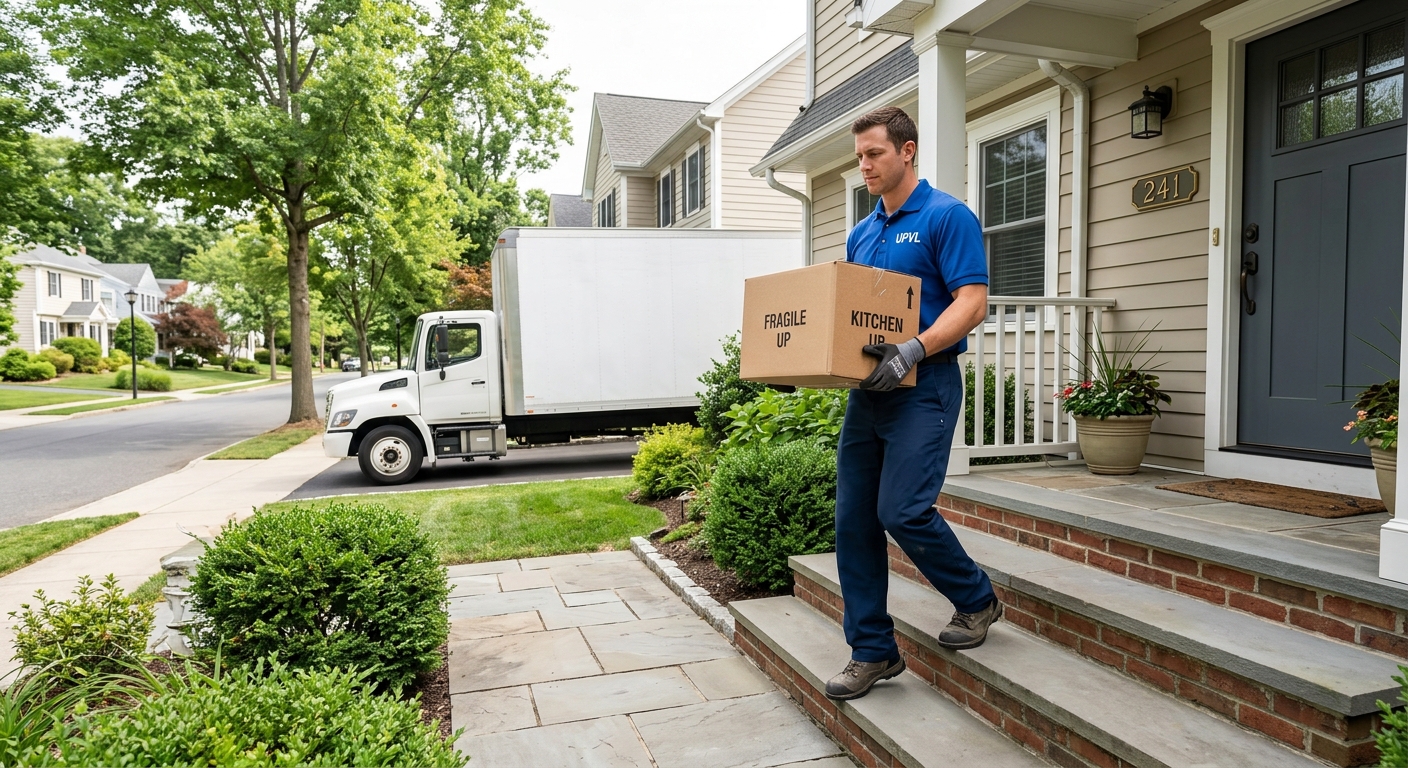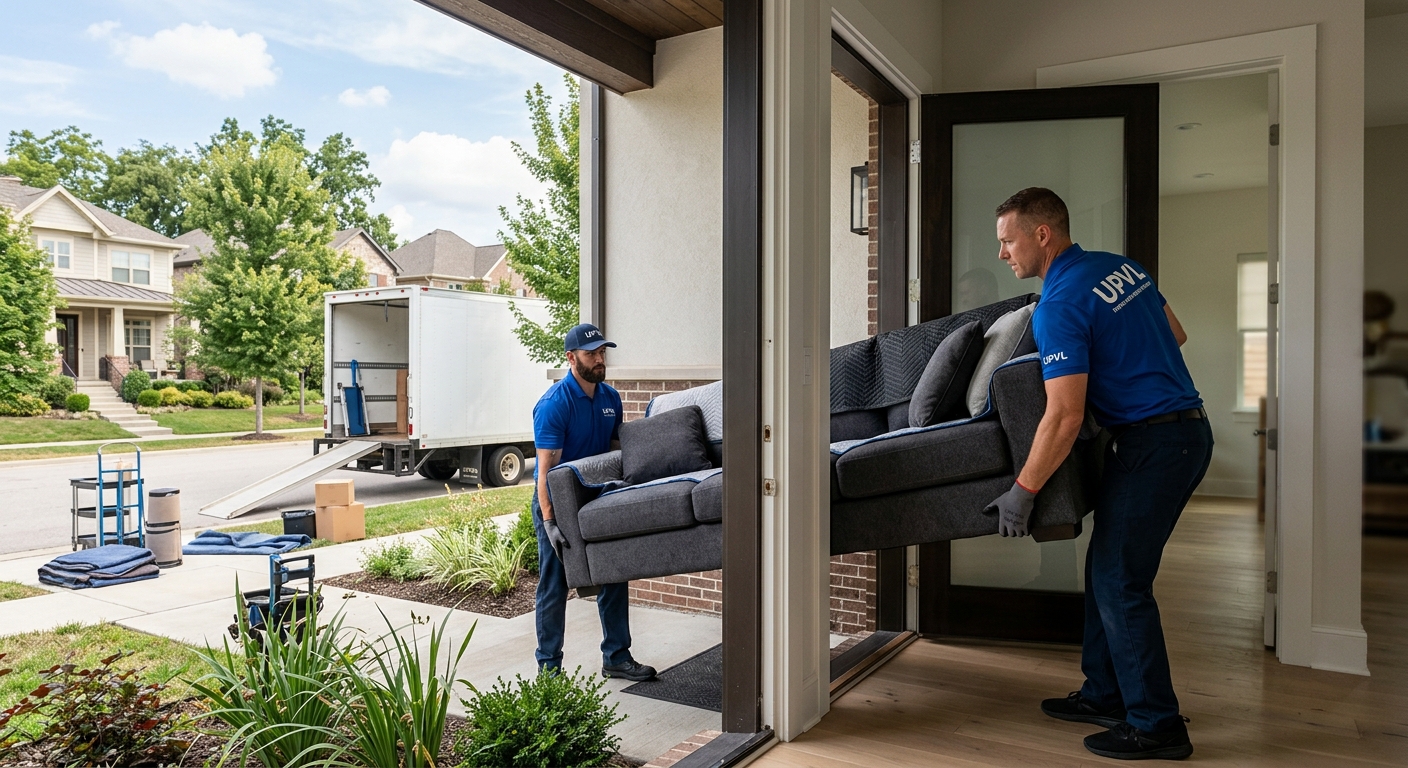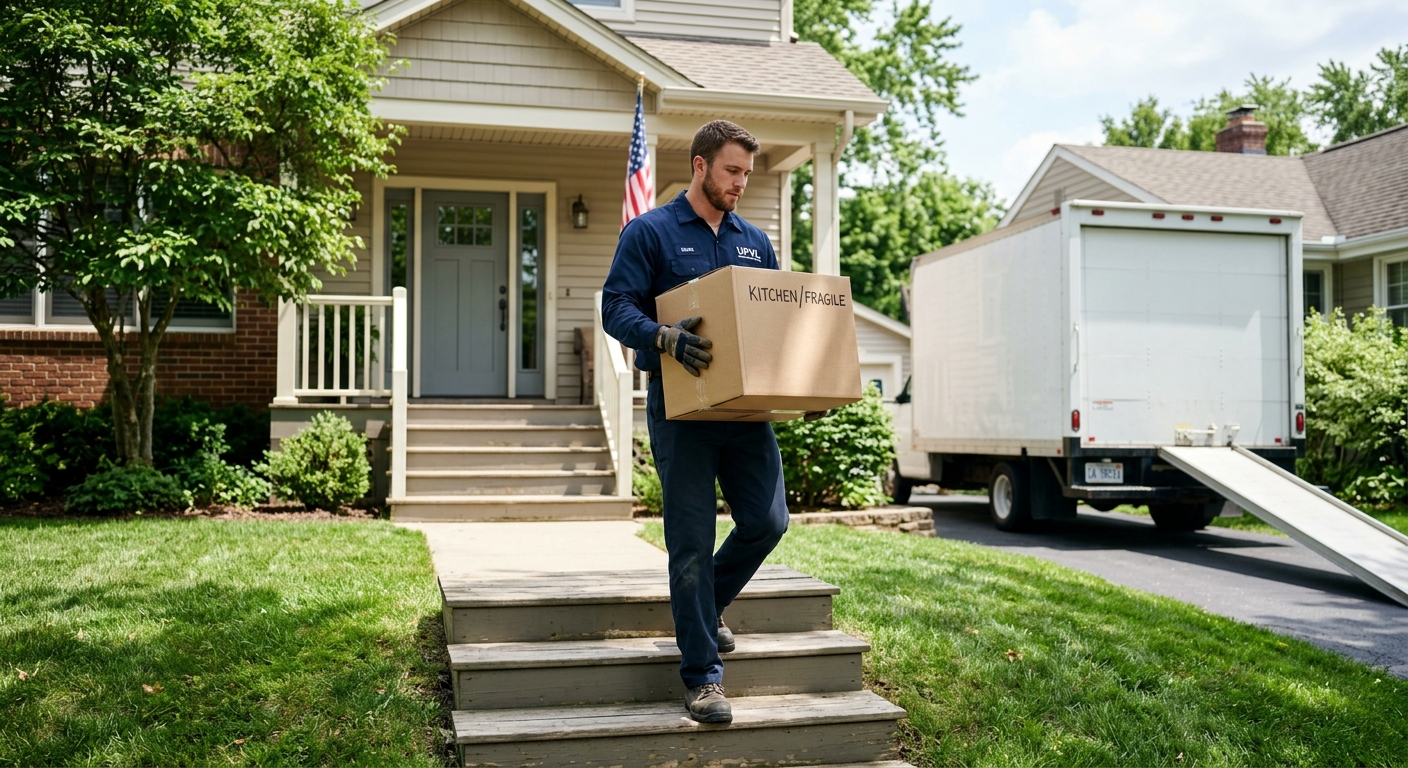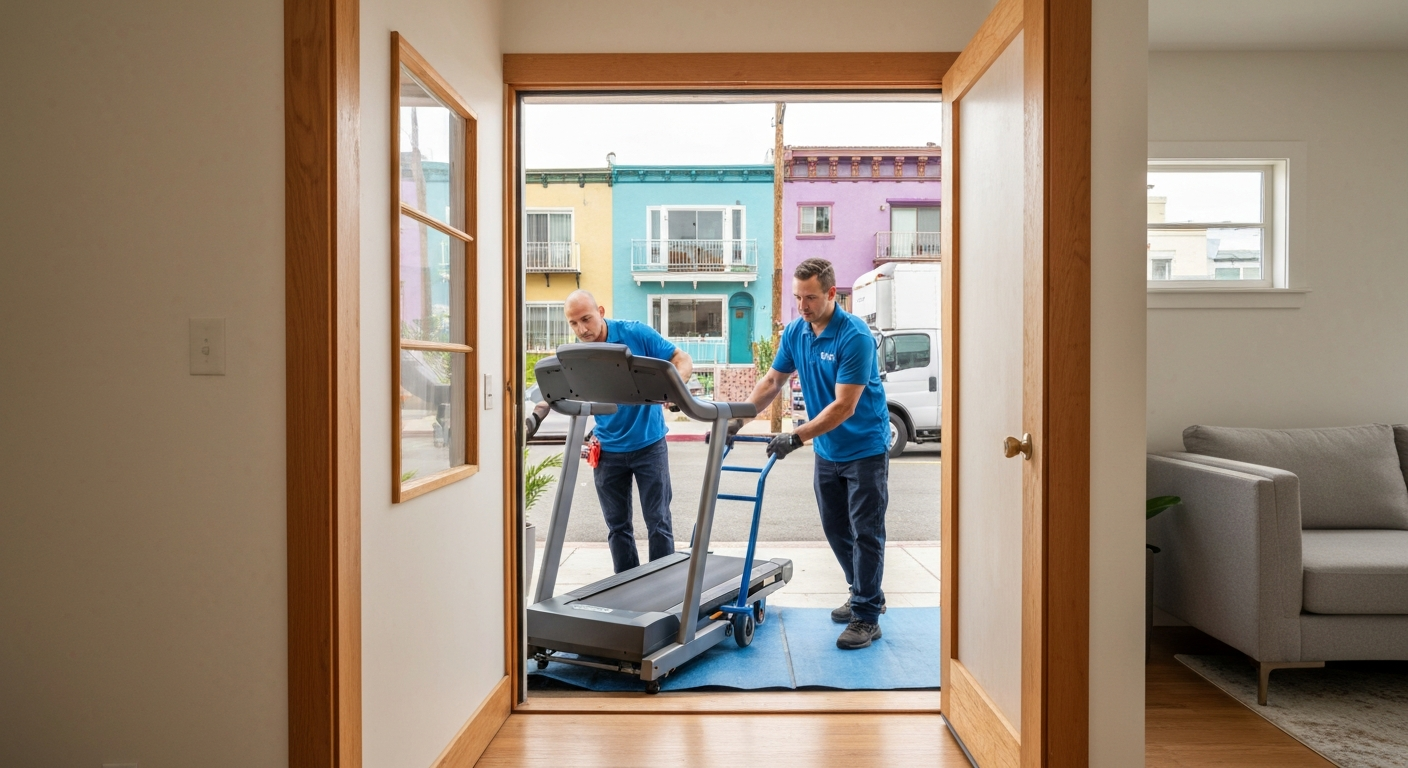
Moving heavy specialty items in Los Angeles is very different from a standard apartment move. Fitness equipment LA jobs, safes, pool tables, and hot tubs all need special tools, trained crews, and smart access planning so nothing gets damaged and no one gets hurt.
Quick Navigation
Heavy item moving in Los Angeles matters because these items combine three risk factors: extreme weight, awkward shape, and high value. A 900-pound gun safe, a slate pool table, or a hot tub can easily damage tile, break stair railings, or injure an untrained helper if the move is not engineered correctly.
Los Angeles adds its own challenges: tight hillside streets, underground parking, high-rise elevators, HOA rules, and city parking regulations. Many LA homes are on slopes, which changes how movers set ramps and dollies. Some single-family homes in neighborhoods like Hollywood Hills or Laurel Canyon may require shuttle trucks because big trucks cannot safely reach your driveway.
Specialty movers bring more than muscle. They bring dollies rated for thousands of pounds, stair climbers, hoisting straps, liftgate trucks, and crews trained in how to protect floors, walls, and the item itself. For complex jobs, a well-run LA moving company will even walk the route ahead of time by video or in person.
FMCSA (the federal regulator for interstate movers) notes that household goods moves involve safety risks that are best handled by licensed professionals. Source: FMCSA.
| Heavy Item Type | Main Risk | Why Pros Are Needed |
|---|---|---|
| Treadmills & fitness equipment | Awkward shape, fragile electronics | Disassembly, wiring protection, secure loading |
| Pool tables | Slate cracking, felt damage | Leveling, re-felting, precise reassembly |
| Safes | Extreme weight, floor damage | Weight distribution, stair navigation, anchoring |
| Hot tubs & spas | Shell cracks, plumbing damage | Rigging, hoists, crane coordination if needed |
If you’re already working with a full-service mover like United Prime Van Lines in Los Angeles, ask specifically about their heavy item handling experience and equipment. Not every “moving company” actually runs safe treadmill movers Los Angeles customers can rely on.
Specialty movers in LA group these jobs under heavy item moving, which usually includes:
These jobs can be standalone—one safe from garage to office—or part of a full household or office move. Companies like United Prime Van Lines commercial movers often coordinate heavy items while relocating an entire office or gym.
Los Angeles residents often call heavy item movers for scenarios like:
Each scenario requires route planning, load-out strategy, and occasionally permits or Certificates of Insurance (COIs) for high-rise buildings.
| Service Type | Typical Crew | Key Tools |
|---|---|---|
| Fitness equipment move | 2 movers | Basic tools, dollies, moving straps, blankets |
| Pool table move | 2–3 movers | Slab lifters, level, staple gun, felt tools |
| Safe move | 2–3 movers | Safe dolly, piano board, stair climber, ramp |
| Hot tub move | 3–4 movers or rigging crew | Spa dolly, skates, rigging straps, sometimes crane |
When people search for fitness equipment LA movers, they usually have one of two problems: the equipment is too heavy or awkward to move safely, or they’re worried about damaging delicate electronics and cables.
Home gyms in LA often include:
A specialty crew will usually:
For customers with premium gear, it’s smart to ask if the mover has worked with brands like Peloton, Life Fitness, Technogym, or Rogue. Some units require calibration or special care with cables. Over-tightening bolts can also bend frames or misalign moving parts.
Not every machine needs full disassembly, but Los Angeles buildings often force the decision:
| Situation | Recommended Approach | Why |
|---|---|---|
| Ground floor to garage | Move mostly assembled | Short, flat path lowers disassembly time |
| Up or down narrow stairs | Partial disassembly | Safer for rails, walls, and movers |
| High-rise condo with tight turns | More extensive disassembly | Prevents wall damage and stuck equipment |
| Commercial gym relocation | Labeling & full breakdown | Best for inventory control and reassembly |
If your heavy fitness gear is part of a larger move, ask your mover whether it will be handled by the main crew or a specialty team. Companies with full packing services, like United Prime Van Lines, can also pack your smaller weights, bands, and accessories at the same time.
Treadmill movers Los Angeles customers trust know that these machines are deceptively heavy. A treadmill’s weight is concentrated in the motor and base, and many home hallways and staircases are just barely wide enough to clear them.
Key treadmill risks include:
Professional treadmill movers Los Angeles residents hire will typically:
You can reduce time and cost by prepping ahead:
LA high-rises may require scheduling elevator time and may limit large-item moves to certain hours (often mid-day on weekdays). Always confirm with your building management so your treadmill movers don’t arrive only to be turned away.
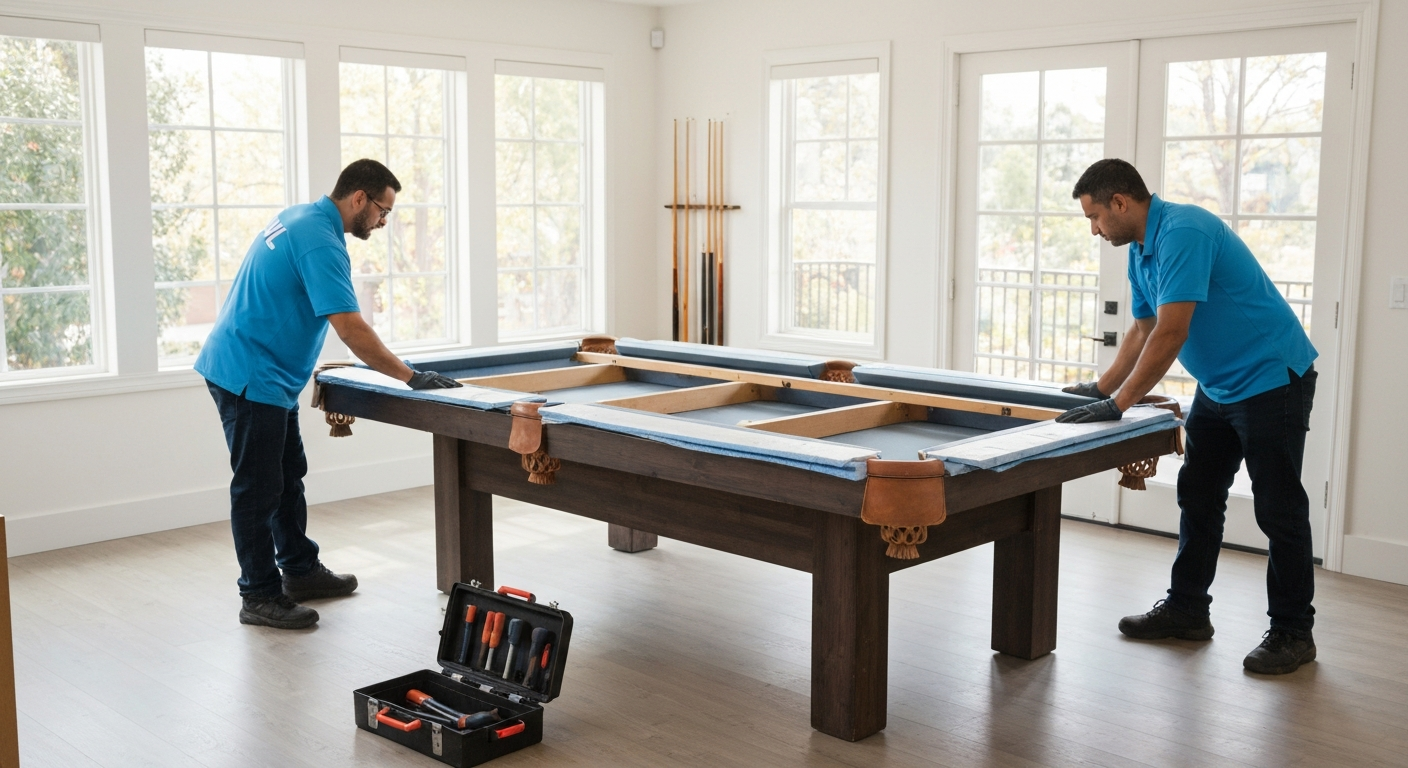
Pool table movers LA customers call in are more like furniture technicians than basic movers. A high-quality slate pool table is heavy, fragile, and precision-leveled. Moving it “as is” risks breaking the slate, stretching the felt, and bending the leg structure.
Professional pool table movers usually follow a detailed process:
Re-leveling is critical. Professional pool table movers in LA use precision levels and shims so balls roll straight. A table parked directly on an uneven hillside floor or old subfloor will be frustrating to play on.
A move is the perfect time to:
Ask your mover if they offer re-felting and minor repair services. Some LA pool table specialists bring felt samples, while others ask you to choose in advance. Because felt installation takes time, this can slightly increase the move window but gives you a fresh playing surface.
| Pool Table Feature | Impact on Move | Notes |
|---|---|---|
| One-piece slate | Heavier, more awkward | May need extra crew or special gear |
| Three-piece slate | Easier to transport | More reassembly time but safer |
| Coin-op table | Extra internal weight | Check for coin mech and electronics |
| Antique table | High value, delicate | Requires extra padding and handling notes |
If your pool table move is part of a bigger house relocation, your mover may combine it with furniture disassembly and assembly services like those offered by United Prime Van Lines.
Safe movers Los Angeles residents hire are dealing with some of the heaviest items in the home. A large gun safe can exceed 1,000 pounds, and even a modest home safe may be over 300 pounds when empty.
To quote and plan accurately, safe movers usually ask:
If you don’t know the weight, a photo of the model label or a link to the manufacturer can help. For very heavy or large safes, movers may visit in person or review a video walk-through before committing to a plan.
Professional safe movers Los Angeles customers use rely on:
On steep LA driveways, they may adjust loading positions or even reposition the truck to keep the safe’s center of gravity stable. Safety for the crew and your property is non-negotiable on these jobs.
| Safe Location | Move Complexity | Typical Requirements |
|---|---|---|
| Garage to garage | Lower | Safe dolly, ramp, 2 movers |
| Ground floor to second floor | High | Stair climber, 2–3 movers, pre-inspection |
| Basement to ground floor | Very high | Careful planning, possible structural check |
| High-rise unit | Varies | Elevator dimensions, COI, building approval |
Because of the extreme weight, some buildings may refuse safe moves above certain floors without engineering sign-off. Your mover should be honest about limits to protect both you and the building.
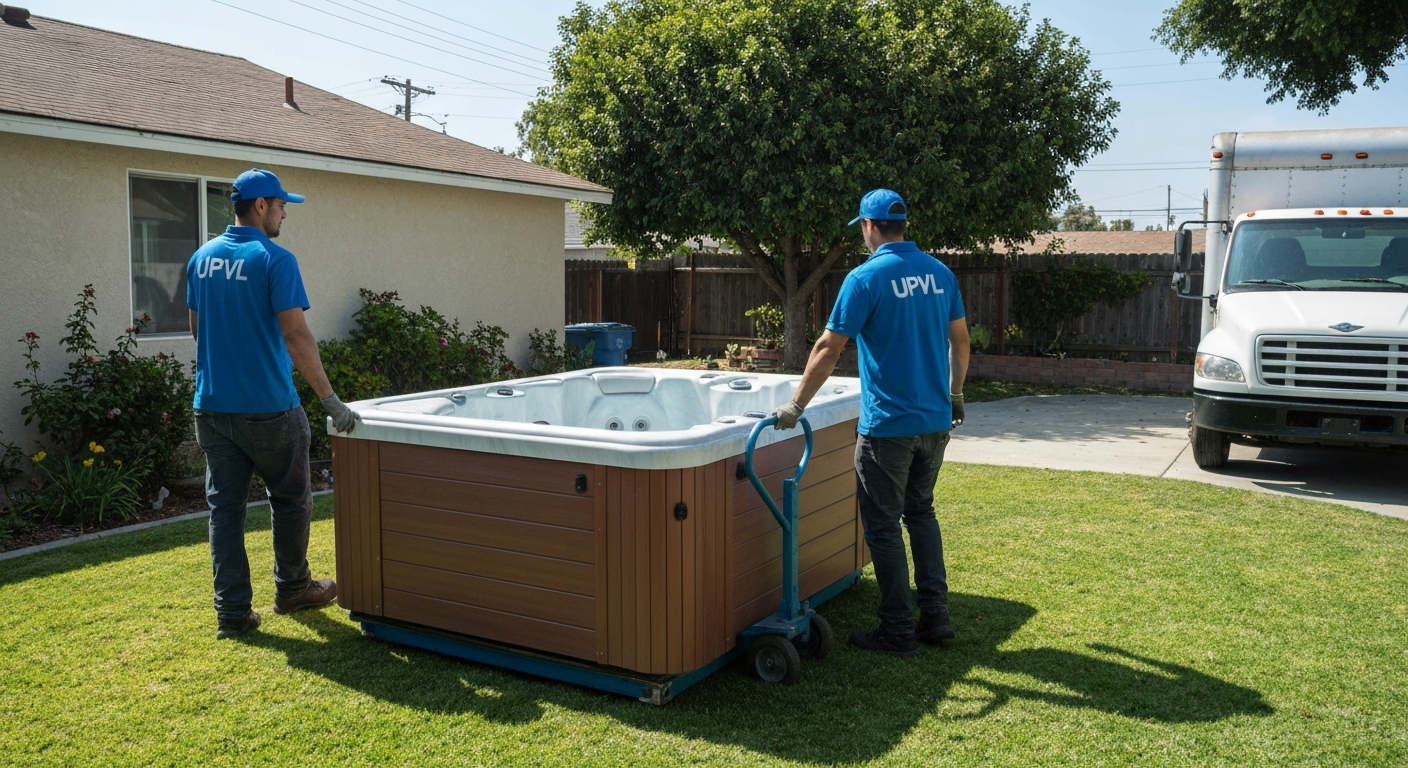
Hot tub movers LA homeowners call in face a unique mix of plumbing, electrical, and access challenges. A typical spa is bulky, heavy, and often surrounded by decks, railings, or landscaping that limits access.
A professional hot tub move usually includes:
Crane service is sometimes necessary in tight LA neighborhoods where the spa is on a rooftop or enclosed yard. This adds cost but can be the safest option.
At destination, hot tub movers Los Angeles crews will:
Movers typically are not licensed electricians or plumbers, so electrical and plumbing reconnection is usually done by your contractors. In wildfire-prone LA areas, be sure placement also follows local fire safety and clearance rules.
| Access Scenario | Move Method | Notes |
|---|---|---|
| Wide side yard, flat | Spa dolly and crew | Most efficient and cost-effective |
| Narrow side yard with turns | Dolly with tilting and careful pivoting | May require extra crew |
| Backyard with no side access | Crane over house or structure | Requires permits and planning |
| Rooftop spa | Crane + building coordination | Complex; may need engineering approval |
Los Angeles is a patchwork of neighborhoods, each with its own access quirks. For heavy items, access can matter more than distance.
Here are some typical patterns heavy item movers see across LA:
| Area | Typical Challenge | Heavy Item Impact |
|---|---|---|
| Downtown LA high-rises | Elevator scheduling, COI, loading docks | Treadmills, safes, and pool tables must fit in freight elevators |
| Hollywood Hills / Laurel Canyon | Narrow, winding streets, steep driveways | Trucks may park further away; safes and hot tubs need extra planning |
| Santa Monica / West LA | Street parking limits, busy traffic | Time windows matter; permits may be needed for curb space |
| San Fernando Valley | Heat, long driveways, garage setups | Good for safe and gym moves, but summer heat impacts crew pacing |
Many LA buildings require a Certificate of Insurance (COI) for moves, even for a single treadmill or safe. A COI proves your mover has liability and workers’ compensation coverage up to the building’s required limits.
For heavy items in condos or offices, expect:
Discuss these rules with your building and share any COI forms with your mover at least several days before the job. Companies like United Prime Van Lines office movers handle COIs regularly for downtown LA and Westside towers.
Los Angeles traffic is legendary. Congestion on the 405, 101, or 10 can stretch a simple cross-town trip significantly. For heavy item moves, this affects crew scheduling and sometimes pricing.
Parking is another major factor:
LA transportation and parking rules change often; checking with local agencies like LADOT and building management can avoid surprise tickets or delays.
Heavy item moving costs in Los Angeles depend on weight, complexity, crew size, and access. There’s usually a base trip or service fee plus labor time and, for some items, a flat specialty item charge.
Every move is unique, but here are general ballpark ranges many LA customers encounter (not quotes, just orientation):
| Item Type | Simple Scenario | Complex Scenario |
|---|---|---|
| Treadmill / basic fitness machine | Short flat move, no stairs | Narrow stairs, long carry, high-rise |
| Pool table | Ground floor to ground floor, easy access | Re-felting, stairs, tight basement |
| Safe | Garage to garage, ramp access | Second floor, tight stairs, heavy unit |
| Hot tub | Flat yard with gate access | Crane required or rooftop move |
Most movers will provide either a flat rate for a specific heavy item or an hourly rate with a minimum number of hours. When included in a full household move, heavy items may be priced as add-ons.
Key cost drivers include:
Companies with robust heavy item experience, like those offering both local moving and specialty services, can often bundle heavy items into larger moves to keep costs under control. See how professional local movers structure hourly labor and truck charges to understand potential savings.
For heavy item moving in LA, you’ll typically see two main estimate or pricing styles: hourly and flat rate. For interstate moves that include heavy items, you’ll also encounter binding and non-binding estimates.
With hourly pricing, you pay for the crew’s time (and sometimes separate travel time). With flat rate, you pay one agreed price for a defined job.
| Pricing Type | Pros | Cons |
|---|---|---|
| Hourly | Flexible, fair if access is easy; you pay for actual time worked | Harder to predict if access surprises arise or building delays occur |
| Flat rate | Clear up-front budget; simpler for single-item moves | Requires accurate description; changes in scope may trigger fees |
| Hybrid (hourly + item fee) | Balances simplicity with fairness | Still needs clear scope definition |
| Interstate binding estimate | Price locked in if scope unchanged | Scope changes require new written agreement |
If your heavy item is moving state-to-state with the rest of your household, federal rules from FMCSA apply:
For extremely heavy items like large safes or hot tubs, it’s smart to insist they are explicitly listed in your estimate, not just lumped under “miscellaneous.” If not listed, movers may refuse to move them or charge extra at loading.
A clear estimate should spell out:
Ask your mover to walk through the estimate line by line, especially for pool tables, safes, and hot tubs. Surprises on move day are usually the result of assumptions that were not written down.
Any mover touching heavy items in Los Angeles should be properly licensed and insured. In California, household movers must be licensed by the state.
For California in-state moves, look for a license issued by the California Public Utilities Commission (CPUC), which took over responsibilities from the former Bureau of Household Goods and Services. You can search licenses on the CPUC’s site. Source: CPUC.
For interstate moves, the mover should have a U.S. DOT number and MC number, regulated by FMCSA.
Customers often confuse the mover’s insurance with your valuation coverage.
For interstate moves, federal rules require movers to offer two main types of valuation:
Source: FMCSA valuation guidance.
For expensive pool tables, custom safes, or hot tubs, ask about:
Always read coverage terms carefully. For example, some policies exclude damage from pre-existing structural weaknesses (like rotted decks under hot tubs). A good mover will explain what is and isn’t covered.
While “packing” usually refers to boxes, heavy item prep and partial disassembly are just as important for a safe move.
Ahead of your fitness equipment LA move:
If you prefer not to handle this, full-service movers like United Prime Van Lines can pack all gym accessories and small gear.
Heavy items can easily mar floors or door frames if the path is not protected. Professional movers typically use:
In LA’s luxury condos and high-end homes, this level of protection is often required by building management or HOAs.
LA’s weather is usually mild, but summer heat in the Valley can affect heavy moves. High temperatures slow crew pace and can affect adhesives and finishes. Early morning or cooler-day scheduling is often preferred for hot tub moves and long outdoor carries.
Rain is less common than in other cities but can still make steep driveways and stairs slippery. In poor weather, a reputable mover may recommend rescheduling a particularly risky safe or hot tub move for safety.
Sometimes your heavy item needs to move out before the new space is ready. That’s where storage comes in.
Movers may offer:
For safes, pool tables, and fitness machines, controlled loading and unloading by the mover is usually safest. Check out options like United Prime Van Lines storage services if you anticipate a gap between move-out and move-in dates.
Each heavy item needs different storage handling:
| Item | Recommended Storage Method | Key Precaution |
|---|---|---|
| Treadmill | Wrapped, upright or on base | Protect console and motor area |
| Pool table slate | Flat on padded supports | Avoid standing upright without support |
| Safe | On pallet or ground, blocked | Prevent any chance of tipping |
| Hot tub | Shell supported on flat surface | Avoid deformation from uneven support |
Use this simple checklist to prepare for your heavy item move in Los Angeles.
| Stage | Action | Status |
|---|---|---|
| Before booking | Measure items and access | To Do / Done |
| One week before | Confirm COI and elevator reservations | To Do / Done |
| Two days before | Prep items (unplug, drain, empty) | To Do / Done |
| Move day | Walk-through with crew and final placement | To Do / Done |
Heavy items typically include anything unusually heavy, bulky, or complex to handle. In Los Angeles, movers consider treadmills, ellipticals, multi-station gyms, pool tables, large safes, hot tubs, pianos, and certain commercial machines as heavy items. These require extra planning, special equipment, and often more experienced crews.
Yes, professional treadmill movers Los Angeles homeowners use can usually navigate stairs, but they need accurate details. They’ll ask about stair width, number of steps, landings, and turns. In some cases, partial disassembly is required for safety and to avoid wall or railing damage.
Reputable LA movers use floor runners, Masonite or ram board, door jamb covers, and corner guards along the route. For particularly heavy safes or treadmills, they may use plywood or steel plates to distribute weight and prevent dents or cracks in tile or hardwood.
Yes, you should remove all jewelry, firearms, documents, and other contents before the safe move. This reduces weight and avoids any risk of items shifting inside and causing damage. Movers are focused on the safe itself, not its contents, so always secure your valuables separately.
Movers will typically drain and physically relocate your hot tub, but electrical and permanent plumbing connections are usually handled by licensed electricians and plumbers. Some moving companies can coordinate third-party professionals for this work. Always follow local electrical and building codes in Los Angeles.
Most pool tables need at least 4–5 feet of clearance on each side for comfortable play and safe installation. Pool table movers in LA also need enough room to work with rails, slate, and felt during reassembly, so clear the whole room as much as possible before they arrive.
Yes. Many LA movers offer warehouse or containerized storage suitable for heavy items. Fitness equipment, pool table parts, safes, and hot tubs can be stored temporarily, but each needs proper support and protection. Ask about climate conditions, security, and how often items are handled in and out of storage.
That’s common in LA. Your mover can issue a Certificate of Insurance showing liability and workers’ compensation coverage with the building listed as an additional insured. Provide your building’s COI requirements and sample language to the mover at least a few days before the job.
For heavy items, especially in summer or at month-end, it’s smart to book 2–3 weeks in advance. If your move requires elevator reservations or crane services, give even more lead time. Some companies offer last-minute options, but access and building restrictions can make same-week scheduling difficult.
Ask specific questions: how many safes or hot tubs do they move each month, what specialized equipment they use, whether they’ve worked in buildings like yours, and if they carry photos or references. You can also check that they are properly licensed in California and have adequate valuation coverage options for high-value items.
Coverage depends on the valuation option you choose. Basic Released Value coverage (often 60 cents per pound) is minimal. Full Value Protection provides better compensation but may cost more. Review the mover’s valuation options and consider additional coverage for expensive pool tables, custom safes, or premium fitness machines.
If the crew arrives and finds access is more limited than described, they may need to adjust the plan: more disassembly, alternative routes, or, in rare cases, rescheduling with extra gear or crew. This can change the price. To avoid surprises, share photos, videos, and accurate measurements when booking.
For California moves, the contact information is:
Moving heavy items in Los Angeles—fitness equipment, safes, pool tables, and hot tubs—is not a DIY project for most households. The weight, value, and access complexity demand specialized skills, equipment, and planning.
By choosing experienced specialty movers, confirming licensing and valuation coverage, and preparing your home and building access ahead of time, you dramatically reduce the risk of injuries, property damage, and stressful surprises. Whether you’re upgrading a home gym in the Valley, installing a pool table in a downtown loft, or relocating a safe in the Hollywood Hills, treat heavy item moving as its own project—and partner with professionals who handle these jobs every day.
If you’re ready to plan a heavy item move as part of a broader household or office relocation, exploring services like Los Angeles moving experts at United Prime Van Lines can help you coordinate everything under one roof, from packing to transport, storage, and specialty handling.